
Sharing a Legacy: Preserving and Sharing a Family Member’s Artwork
Maybe your parents are moving out of the house they’ve lived in for forty years, and there’s a garage or a spare bedroom full of your mom’s paintings that everyone in the family should get to enjoy, not just whoever ends up with the boxes. Maybe it’s your dad’s 80th birthday and everyone wants to put together a book of everything he’s painted over the years. Maybe someone you loved has passed, and there’s a collection left behind. Whatever the occasion, if you’re the one figuring out what happens with a parent’s or family member’s artwork here in the Twin Cities, here’s how I can help preserve it and share it with everyone who should have it.
Do I Need to Be an Artist to Work With You?
No. Most of the people who bring me a family collection aren’t artists themselves. They’re a son, a daughter, a sibling, whoever ended up with the job, and they don’t know anything about color profiles, file resolution, or what makes a good photograph of a painting, and they don’t need to. I handle all of that: color correction, proper lighting, and files prepared for whatever comes next, prints, a book, an archive. I work with exhibited, professional painters all the time, and the same color-accurate process and equipment carries over to your family’s collection. You get that level of technical care without needing to know a single thing about art or color yourself.
What Happens to the Paintings Themselves?
Whether it’s a move, a downsizing, or dividing up a collection after a loss, the usual situation is the same: several family members, one set of paintings, and no clean way to split them up that feels fair to everyone. Digitizing the whole collection at high resolution solves this. Once every painting exists as a color-accurate file, everyone has everything, regardless of who ends up keeping which original. The paintings themselves can then be divided fairly, kept by one family member, sold, or donated to a museum, historical society, or arts organization that will care for them properly, without anyone giving up their connection to the work itself.
What Happens to the Files Afterward?
Once a painting is photographed, the file itself can go to family anywhere in the country by email or a shared drive link. From there, each person can choose their own size and material when they get a print made: photo paper, canvas, metal, acrylic, framed or unframed. The sister in Phoenix gets a large canvas for her living room. The brother in Vermont gets a framed print for his home office. Nobody ships a fragile original, and nobody has to compromise on what they actually wanted.
How Do I Get the Actual Prints Made?
Once you have the files, ordering a print is straightforward: a local fine art or photo printer can produce it in whatever size and material you choose, from the same file, for as many family members as need one. If you’re not sure where to start, I’m happy to point you toward printers I trust when the time comes, and my Artist Resources page has more general guidance for artists and families working with prints.
Why Make a Book?
A lot of families also make a printed art book from a parent’s paintings: something small and tangible that fits easily on a shelf even in a downsized apartment, and can be picked up and enjoyed anytime, not packed away in storage. Whether it’s a milestone birthday gift while Mom or Dad is still around to enjoy it, or a keepsake made after a loss, it’s usually the piece of the project people end up treasuring most.
What If There’s Also an Estate or Insurance to Think About?
Sometimes there’s a practical side running alongside everything else: a move that requires knowing what’s worth keeping, an estate that needs documentation, insurance that requires condition records, or the possibility that some pieces will eventually be sold or donated. A proper photographic record covers that too, without changing what this project actually is for most families: a way to preserve a parent’s artwork and share a family art collection, not a legal formality.
How Does a Project Like This Actually Work?
Every collection is a little different in size and condition, so the first step is just a conversation about what you’re working with: roughly how many pieces, where they are now, and what the family wants out of it (files for everyone, a book, both). Most sessions happen at my Minneapolis studio; for larger collections, we can talk through the logistics together. If pieces need to be gathered from different family members first, my page on transporting artwork safely covers how to do that without damaging anything. From there, the paintings get photographed with the same color-accurate process used for working professional painters, so the digital versions actually look like the originals, not like a phone photo taken in a dim living room.
Getting Started
Whether you’re working against a moving date or there’s no rush at all, there’s no wrong time to start. If it’s been on your mind, reach out and we can talk through what your family’s collection needs, including what a project like this typically costs. Call or text 612-702-9571, or contact me here.
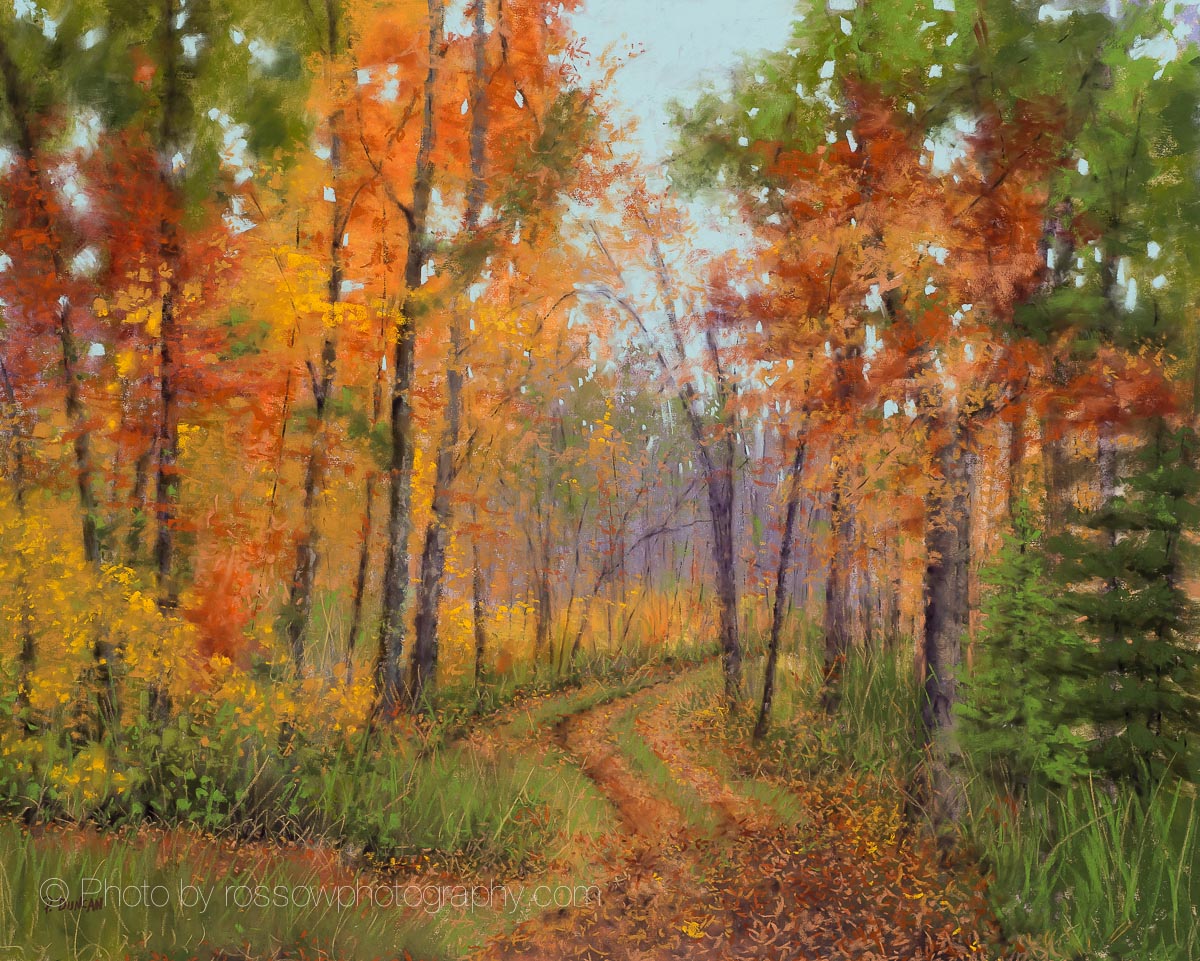
* Featured Image above: Honor the Harvest by Patricia Duncan